.webp)
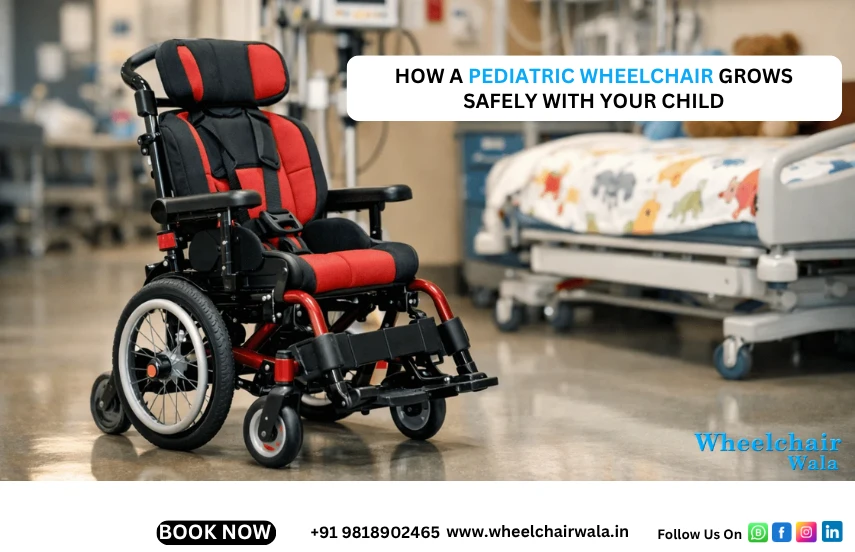
You know that moment when your kid outgrows their shoes overnight, or the school uniform suddenly stops fitting? Wheelchairs do the exact same thing, and nobody really warns you about it. If you're a parent going through this right now, you already know the actual problem isn't buying a wheelchair — it's finding one that can keep pace with your child instead of slowing them down. A decent pediatric wheelchair does more than move a child from one place to another. It's what lets them race their friends during recess, get through a whole school day without their back hurting, and just... feel like any other kid on the playground.
Why "One Size Fits All" Doesn't Work With Kids
Grown-ups buy a wheelchair once and it lasts them years, more or less unchanged. Kids are nothing like that. Give it a few months and there's a new height to deal with, a different posture issue, maybe more strength in the arms now, maybe less control than before. Go look through any parenting thread on Reddit or Quora and you'll see the same question asked over and over, just worded differently — "why has my son's wheelchair already gone too small in less than a year?" Truth is, most regular children wheelchair models were never really designed with growth as a priority in the first place.
The Sizing Headache Nobody Prepares You For
This is exactly why Pediatric Wheelchair Sizing matters so much more than people assume going in. Seat depth, how high the backrest sits, the distance to the footplate, where the armrests land — every one of these measurements plays a part. Go too big and the child ends up slouching or sliding around. Go too small and you're looking at circulation problems or bad posture building up over time. When the fit is right, the spine gets proper support, and the feet actually rest flat instead of hanging in midair.
Choosing Between Manual and Power Options
Not every child needs the same kind of push. Some thrive with independence through a Pediatric Power Wheelchair, especially kids who have limited upper body strength or tire easily. Others do just fine—and even love the exercise—with a Pediatric Manual Wheelchair that a parent or the child themselves can push.
When Weight Becomes the Real Deciding Factor
Here's something parents rarely think about until they're loading a car trunk for the third time in a week: weight. A Lightweight Pediatric Wheelchair makes daily life so much easier—folding it, lifting it into a car, carrying it up a curb without a ramp. Heavy frames sound sturdy on paper, but in real life, they exhaust caregivers fast.
Special Considerations for Cerebral Palsy
For families managing cerebral palsy, an ordinary child wheelchair often falls short. A proper Cerebral Palsy Wheelchair for Children isn't something you can shortcut on. It needs real trunk support, headrests that are actually custom-fitted, hip guides to keep posture in check, and in a lot of cases, tilt-in-space seating to help manage muscle tone and keep pressure sores from becoming a problem. And honestly, this isn't some extra feature you tick off a checklist — it makes a direct difference to how comfortable the child is, how easily they breathe, and even how well their digestion works through the day.
Comfort That Supports Daily Function
When a Cerebral Palsy Wheelchair actually fits the way it should, you'll notice it in small things first — a child using their hands more freely, holding eye contact during a conversation instead of struggling to sit up, eating without fighting their own posture the whole time. It's not just about getting from one room to another. It genuinely changes how a child moves through their whole day.
Everyday Life: School, Play, and Independence
At the end of the day, no showroom can really tell you if a kids wheelchair works. That test happens on the school ramp, out on the playground, or in the middle of a birthday party with everyone running around. Whether your child is the type who can't sit still and wants to be outside all the time, or you just need something reliable for the daily school run, it all comes down to the same thing — your child should feel free, not held back.
So, ready to get this right for your child? Reach out to a specialist and let your little one move around with real confidence.
Final Thoughts
Honestly, picking a pediatric wheelchair is never "just shopping." It's a decision that ends up shaping how confident your child feels, how comfortable their day is, and honestly, how much they enjoy simple things like playing outside or sitting through a full school day without discomfort. So take your time with it. Measure properly, ask questions, and please don't settle for something that "sort of works." If you're stuck or just don't know where to begin, the folks at Wheelchair Wala a leading (wheelchair shop) are genuinely happy to sit with you, understand your child's needs, and help you land on the right chair — because every child deserves to move on their own terms, without limits holding them back.